01
Understand your challenge and technical requirements
We review API documentation, available access and sample data from both systems. With your team and suppliers, we establish the source of truth, API limitations and how to test the exchange.
Copying data between your CRM, ERP, online shop or planning tool takes time and makes errors difficult to trace. We build API integrations that exchange data between existing systems in a controlled way. We also discuss what happens when a system stops responding, data differs or a supplier changes its API.
Copyright in the custom code is always transferred to you
A software development company led by two lead engineers
Clear guarantees covering costs, software and security

Connecting existing systems
We start with the data you need to exchange: customers, orders, stock, invoices or statuses. For each item, we determine the source of truth, the direction of transfer and how quickly a change needs to be processed. An immediate exchange may fit, or a scheduled synchronisation or event notification may be more appropriate.
Systems use different field names, codes and meanings. We document that mapping and check how missing or invalid data should be handled. Access is explicit too: the integration receives the permissions it needs, with agreements about keys, authentication and renewing access.
Sending a request does not mean processing succeeded. We therefore discuss retries for temporary failures, preventing duplicate processing and making errors visible. Logging and monitoring should help trace what was exchanged and what action is needed, without recording sensitive data unnecessarily.
Discuss your systems and data flows
Fintech · Getsby
For Getsby, we built an app that lets users buy, top up and manage virtual payment cards. Several financial providers work behind that app. Every movement of money needs to be traceable, including when a payment doesn't go as expected.
We made transactions traceable and structured the integrations so financial providers could be replaced. When a payment route proved insufficiently reliable in practice, we could replace it without rebuilding card management.
Early engineering decisions determine how much freedom you have later. Tests and monitoring help us keep checking that foundation as the product evolves.
Explore the engineering decisions behind Getsby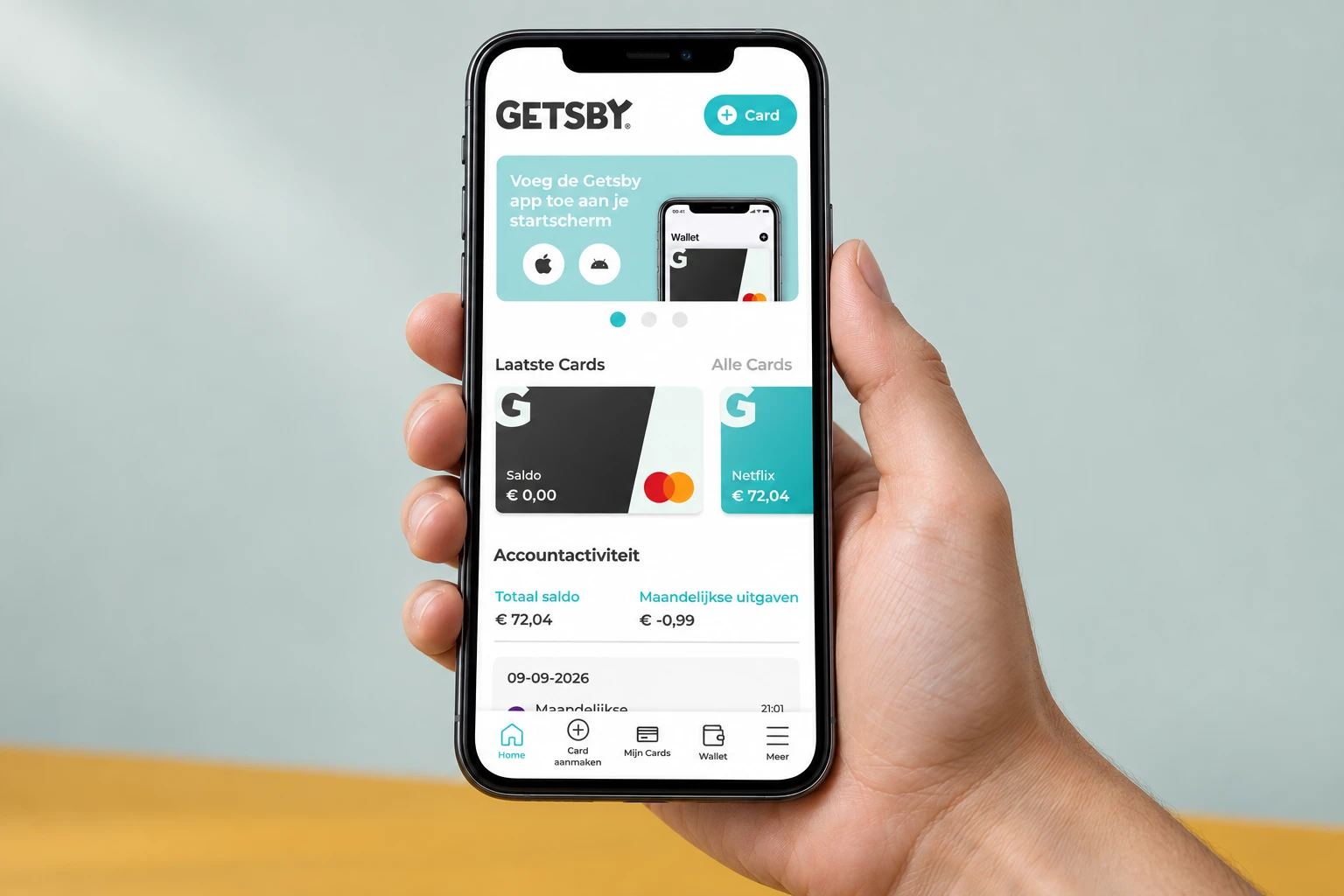
Managing the integration after launch
An order may exist in one system while still missing from another. Users need to know whether an exchange is waiting, complete or needs attention. We discuss which statuses you need and how your team can follow up errors.
Retries can help with temporary failures. They also require checks against duplicate processing: the same order or invoice must not be created twice unintentionally. Where the API supports it, we use identifiable requests and track progress.
We agree on who handles changes, expired access and supplier incidents. These maintenance agreements help determine how we build the integration and which monitoring is needed.
Explore our maintenance and support approach
Esther Radder
Product manager for Werkplanner at SGI Compliance Nederland

Antoon Scheffers
IVBB

Toon Van Dooren
Lead innovation engineer at Savvii Managed Hosting

Viktor Mirovic
Owner of TasteIndex
A company of developers
Apart from Bas in sales and Linda in operations, everyone at 10KB is a developer. We don't employ project managers, designers or marketers. Software development is our craft, and our company is built around it.
You explain your requirements to the people writing the code. We make the technical choices understandable: what are the options, and what does each mean for reliability, security, costs and maintenance? You don't need to be a programmer to take part in those decisions.
Together, we choose what best fits your challenge. We keep considering those trade-offs throughout development, as usage grows, requirements change or a simpler solution becomes possible. Coordination, planning and explanation are part of our developers' work.
How direct contact with developers works
Ewout Kleinsmann and Roland Boon
Ewout and Roland were already programming together as students. That led to the founding of 10KB in 2013. They still do what brought them together: build software.
They contribute to all our projects every day. Their working day revolves around code: programming, reviewing colleagues' work and making technical decisions. When you discuss your software with them, you're talking to people who help build the solution themselves.
Ewout guides projects from the first outline through to delivery, keeping an eye on how the parts work together. Roland sets the technical direction and focuses on code quality, security and maintainability. You'll find them working alongside the other developers.
Meet the whole team
Agreements before the first line of code
Where a cost guarantee is agreed, the pessimistic estimate in the proposal sets the maximum for unchanged functionality and assumptions. If the work takes less time, you pay for the hours actually worked. We estimate new requirements separately.
We fix faults arising from our original development at no extra charge within the agreed scope and warranty period. The proposal specifies that period. We also agree on aftercare in advance: how to report problems and who handles them.
We address delivery findings from an agreed independent security audit at no extra charge within the agreed audit and project scope. The guarantee covers fixes to the delivered solution. New security requirements outside those agreements aren't included.
A maximum for an unchanged scope
Where a cost guarantee is agreed, the pessimistic estimate in the proposal sets the maximum for unchanged functionality and assumptions. If the work takes less time, you pay for the hours actually worked. We estimate new requirements separately.
Your investment, your software
We always transfer copyright in the custom code we develop for you. You can develop the software further, build an internal team or continue with another supplier.
We make that practical too, with access to the source code, documentation and necessary accounts. Wherever possible, hosting and external services are registered in your name. Third-party libraries and services remain subject to their own licences and terms.
You stay with us because the collaboration works. Your software doesn't tie you to us.
Our intellectual property agreements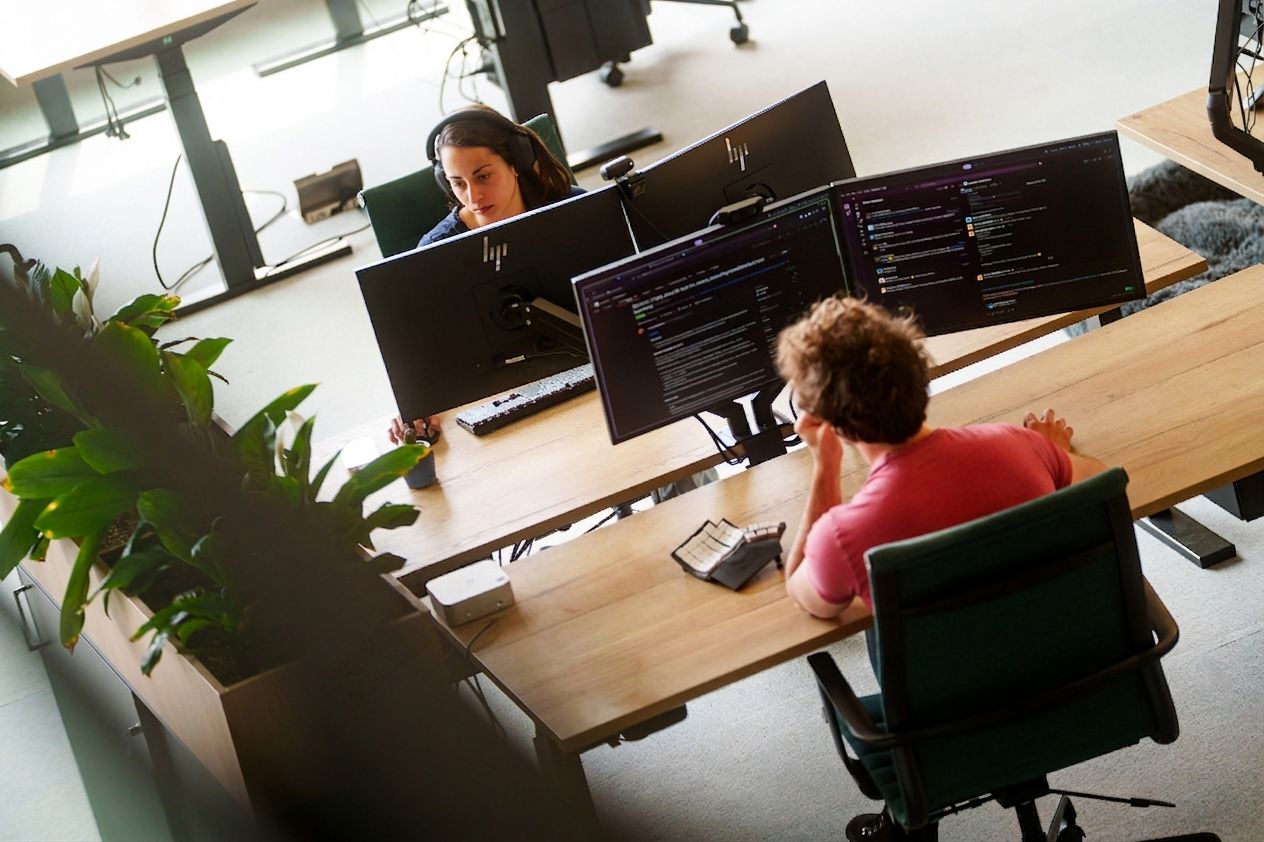
From the first conversation to daily use
You know your product, users and ambitions. Together, we turn them into a technical approach. We explain the options and trade-offs so you understand what we're building and why.
01
We review API documentation, available access and sample data from both systems. With your team and suppliers, we establish the source of truth, API limitations and how to test the exchange.
02
We describe data mapping, synchronisation and error handling and estimate each part. We make dependencies on suppliers and test environments explicit. This defines the scope and who provides each piece of access or information.
03
We test representative data, including temporary failures, missing fields and duplicate messages. After launch, logging and monitoring help track operation. We agree on who follows up errors and how API changes and security updates are managed.
Our strength is software engineering. It is valuable when an integration needs to keep supporting your business process through failures, changes in data or new API versions.
Unsure which route fits? We're happy to discuss whether our engineering expertise would add value to your project.
Often, yes. We first check whether the systems have a usable API or another suitable interface. Documentation, access, data quality and supplier limitations also matter. A standard integration may be enough; custom development makes sense when it cannot adequately support your process.
The work depends on the available APIs, data mapping, synchronisation and error handling. A small integration differs from building an entire application: the starting point of around €25,000 for new builds is not a minimum for every integration. We estimate your specific requirements by component. An ongoing development retainer of around €4,000 per month may suit a larger software environment, but is not a mandatory package. Read our budget and pricing model.
We establish which requests can safely be retried and how to avoid duplicate processing. Unprocessed data and errors need to be traceable. The right approach depends on the API's capabilities and the consequences of missing or duplicate processing for your business.
We restrict access to the data and operations it needs. We discuss secure storage and renewal of keys, encrypted connections and which information may be logged. Tests help check that unauthorised requests are rejected.
Yes. We coordinate access, API agreements, test data and responsibilities with your internal team and software suppliers. This matters when changes and incidents affect several systems.
The schedule depends on what the first version needs to do, its integrations and any migration of existing data. We agree on what needs to be usable first and the steps required to get there. On your side, we need someone who knows the product and its users, can set priorities and has time to review work in progress. We take that availability into account when planning.
Yes. For Werkplanner, for example, we gradually took over development from the existing developers. We first examine the code, documentation, hosting and dependencies. Then we discuss what can stay, where the risks lie and how to organise a responsible handover.
We agree in advance on how to report problems and what the software warranty covers. We make separate arrangements for ongoing maintenance, security updates, hosting and availability. For business-critical software, those can be recorded in an SLA. See our approach to maintenance and support.
Bas usually handles the initial introduction and learns about your requirements. Ewout or Roland joins for the technical discussion. During development, you work directly with the developers. If you'd like to raise a technical question straight away, you can also email Ewout or Roland. An introductory conversation comes with no obligation.
Ewout

Tell us which systems you want to connect and which data needs to be exchanged. Share any API documentation you already have. Call +31 24 669 05 18 or email Ewout directly.
CONTACT
Have a question or want to discuss your software? Leave your details and we will get back to you soon.