An application migration that stays under control
Application migration is rarely only about technology. You are not just moving code, but also data, users, working methods, and operational risks. That is why it helps to approach migrations in clear phases, instead of trying to replace everything in one large jump.
Move from the current situation to a target architecture through explicit steps
Attention to data, validation, acceptance, and go-live
Less risk of operational disruption during the transition

When this fits
Moving to new software or infrastructure
Application migration is the right fit when your software, infrastructure, or Glossary · In briefdata modelA data model describes which data a system records, how that data is related and which rules it must satisfy.Read more no longer matches the future, while the current operation still needs to keep running. You then need to know what the target architecture is, how data moves, and which steps can safely be executed separately.
That preparation decides whether a migration stays controlled. Without clear phasing, validation, and acceptance, a technically sensible trajectory can quickly turn into an unnecessarily tense go-live.

What is often needed
From migration plan to control
We make explicit where you are starting from and where you are heading. Only once it is clear which parts stay, which are replaced, and which dependencies are affected can you phase the work realistically.
Data migration needs concrete mappings, scripts, and checks. You want to know which fields move across, how exceptions are handled, and how you verify that the new situation is correct in substance.
A migration often affects multiple user groups. That is why we define which parts move when, how acceptance happens, and how to keep the transition understandable for everyone who depends on the software.
The first period after a migration is at least as important as the technical preparation. That is why monitoring, issue follow-up, and clear maintenance agreements belong in the same trajectory.
First map the route
Current situation and target architecture
We make explicit where you are starting from and where you are heading. Only once it is clear which parts stay, which are replaced, and which dependencies are affected can you phase the work realistically.
Our approach
Migrate without losing sight of the daily operation
We treat migration as a combination of substance and operations. What has to move, what can stay, what must be validated first, and where are the points where risk accumulates? By answering those questions early, a migration becomes less dependent on improvisation in the final week.
The 50five case shows how important continuity is when existing software already has a critical role in day-to-day operations. During an application migration, users also need to be able to work with the new system.
View the 50five case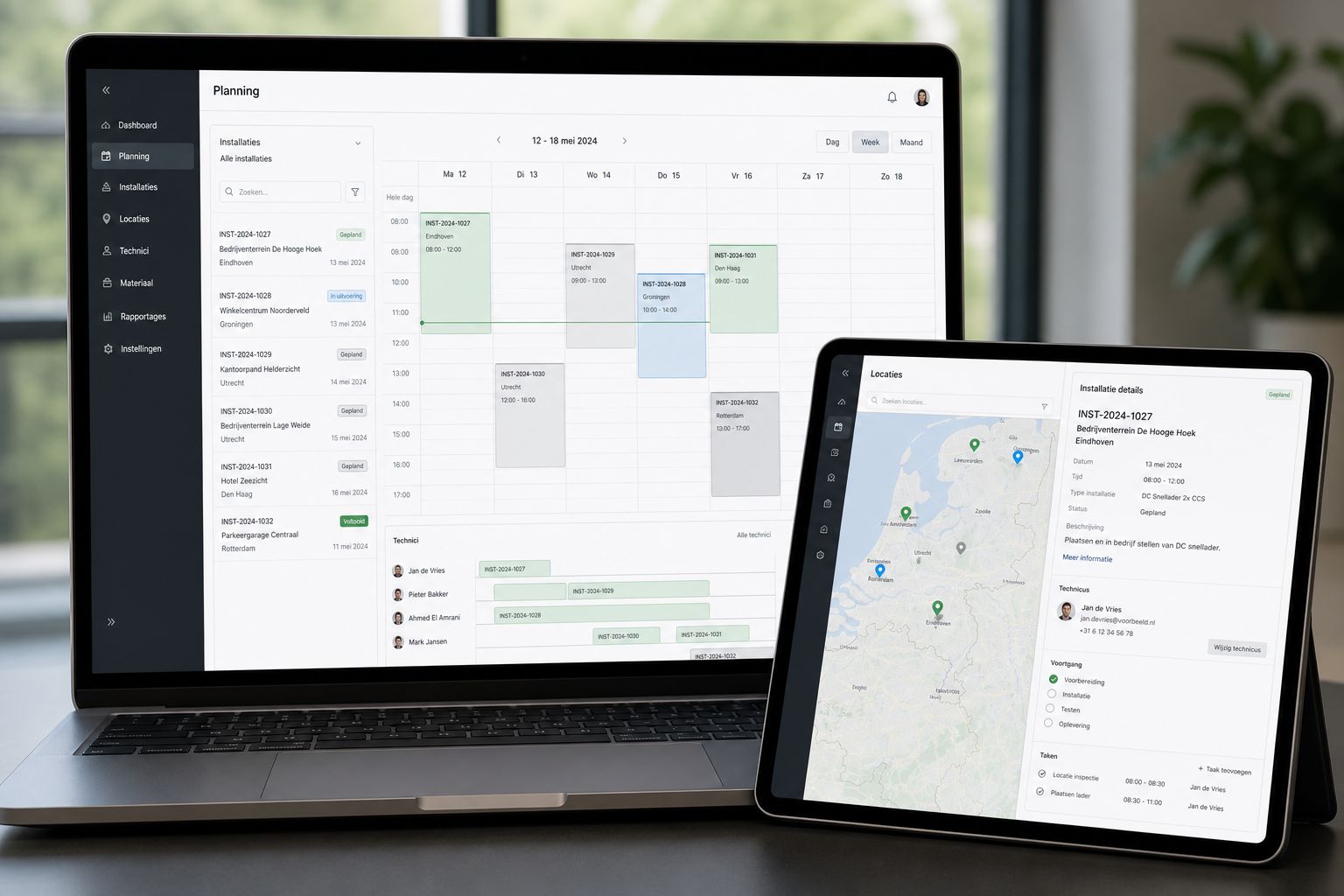
What this gives you
A migration path with fewer surprises on the road to go-live
More control over data, validation, and acceptance
Better alignment between the technical transition and daily operations
Clearer choices about what stays, what is replaced, and what moves in phases